Wednesday, 23 September 2015

Lead Generation

Lead generation online using the social networks and social media can
pay dividends to almost any business. However generating sales leads
online requires marketing support with content, whitepapers, case
studies and promotional offers not to mention sales tools. In terms of
sales time or effort, generating leads can account for almost 50 percent
of a sales force time and this part of the sales process can be often
underestimated when it comes to the cost,time and resources required. To
make a sales funnel successful the starting point is the process of
generating leads via activities like cold calling, inbound marketing,
social selling even trade-shows, then nurturing these leads where the
sales team turn suspects into prospects and prospects into sales. So
before any sales happens, a business needs a healthy and continuous
pipeline of new leads to sell nurture.


social-media-lead-generation


Lead generation is a constant challenge for many companies, in fact
research by Forbes Magazine showed that more than 60% of the marketer
and sales community polled stated that their greatest marketing
challenge was generating more sales leads for the sales teams, and
nearly two-thirds (63%) reported that their current marketing tactics
either does not meet the sales force demand or they are not sure of
whether their marketing mix is effective. Also as much as 40% of those
polled cited accurate lead measurement and the attribution of digital
marketing as their biggest challenge. Even though marketing executives
report that lead quality is one of the top priorities for lead
generation, it is also one of the biggest challenges facing marketers
today. In another study by IDG, 61% of marketers reported that
generating high quality leads was problematic for their organization.


Another remarkably fact is that over a quarter (26%) of respondents
said they do not track leads to any specific marketing program at all or
they only attribute leads to one program. The old saying about “They
know half their marketing spend works but not which half” seems to still
ring true more than ever.


While lead generation costs have reduced thanks to activities like
social selling, it still can be costly think CPC campaigns or outbound
sales, so sales management needs to constantly reinforce that without
lead generation activity there is no customer acquisition and probably
no sales. The challenge today with educated buyers and tight margins is
to empower everyone in a sales and marketing role a “lead generator”  to
fill the sales pipeline. I suggest lead generation needs to be a two
pronged attack, one via inbound marketing (content, blogs,promotions,
white papers) and the second via the sales team (social selling,
utilizing social network contacts ) as lead generation needs to be a
joint effort between sales and marketing or Smarketing.


Too often lead generation effort has been relegated to doing some
half hearted activity on social media, maybe publish an article or two,
try some Google Adwords  and see what happens. To have a real successful
lead generation process then a business needs to have a plan that
covers all customer acquisition strategies and channel development. The
really successful companies know how to build a lead generation machine
then fill the sales pipeline with qualified leads. Most small companies
cannot scale not because of their product or because they cannot sell
but because they cannot build a big enough sales pipeline in a
timely,cost effective way to drive revenue income. They run out of time
because the sales pipeline dried up.


Sales teams now have multiple lead generation sales tools and resources, when it comes to lead generation online there is Connectors Marketplace,
LinkedIn, Angel List, Crunchbase, Owler and other business listing
sites. To power online lead generation there are tools like Hubspot or
Marketo to social network communities like Facebook, Twitter, Pinterest
and Tumblr, all which can be worked to deliver sales lead volumes.


 Finish reading the original article here: Lead Generation Online | Instant Lead Generation For Social Selling

Social Media Marketing Strategy – The Bitter Business

This is a seven step guide to creating a social media marketing
strategy to reach more customers and drive greater on-line awareness for
your brand or product. For a business to really capitalize from social
media, it needs to build a clear strategy that takes into account what
are the goals, what are you trying to achieve, who are the target
customers are and what is the competition is doing.


Social media marketing can be defined as the use of blogs, articles
and content marketing, white papers, video and images to share on social
networks to raise awareness to pull in the web traffic and prospects


social-media-strategy


Read the full article here: Social Media Marketing Strategy – The Bitter Business

Friday, 18 September 2015

Social Selling Tips

The sales and marketing buzzword word at the moment is “Social
Selling”; where the sales process is now tapping into social media
conversations and the impact of social networks in driving brand
awareness or buyer consideration.  Most sales and marketing leaders
would concur that the sales process has completely changed. Sales people
need to adjust their skill set as tactics like cold calling has a low
return for allot of effort so learning how to harnessing the power of
selling via social media is important.


A social selling strategy should be about a genuine effort to share
value and content prior to engaging in any sales conversations.  Social
selling is not SPAM, too often the simplistic approach is for sales
people to spam sales messages on Twitter, Facebook, on LinkedIn groups,
or to a new connection  with a vanilla flavored sales message and a
self serving web link.  If you do this stop, as the moment anyone gets
these messages, the brand loyalty and any trust gets flushed away.
Connecting and building your social network just to SPAM them is NOT
social selling.


The biggest social selling tip is to truly build value over time with
your social network by sharing content that people find useful and
helpful. In time when you personally message to a social tie to engage
in a sales discussion your chances of a positive response will be
greatly improved.


So a great social selling tip that will benefit all social marketers,
sales people and businesses is to take the time every single day to do
the following.  Connect to your social network community with news,
images, videos, snippets of information. Another tip is to find ways to
connect your network together (as this provides value) and offering to
help others connect.  Pause a minute and think about this scenario. You
see a message posted on LinkedIn that says, “Where could I find some
inspiration for a presentation?”  Instead of posting of reply such as, I
would be interested in this myself or have you tried PowerPoint? (True
reply!).  Why not see if anyone in your network is a presentation expert
or does allot of presentations that you could offer to put in touch
with your connection that is looking for some presentation inspiration.
Act as a conduit, a connector who brings value by taking the time to
listen and connect your social ties


social-selling-tips


Social Selling Steps. 


Step 1. Listen to and monitor social media conversations across
several social networks to get a comprehensive view of what’s being said
about your specific focus


Step 2. Start to identify interests, most liked news, influencers and prospects through the listening process


Step 3. Track your prospects. Review their posts, timelines and understand what they are interested in or saying.


Step 4. Share quality content (not just your own). Seek out some
information of mutual interest, and then share. The information must be
professional and relevant to them. You can also like or even re-tweet
their content.


Step 5. Position yourself as an expert by sharing real insights and
proven research you have gained in the industry or with working with
customers


Step 6. Gradually become a valuable connection, one worth listening
to. Once you have established yourself as a valuable connection, you can
nurture and build a buyer/supplier relationship far more quickly.


These steps are the foundations of social selling, and too many
marketing and sales  people forget that selling is all about firstly
building relationships and secondly providing value.  Start now to
implement these social selling steps and you will have set yourself to
gradually drive more sales then cold calling can ever do.


Another social selling tip is to remember that selling is inherently
social so social selling is nothing new. Rather look at social selling
as a sales tool to help you sell more effectively that will evolve over
time.


social-selling-tip


Next up on the tip list is to break ‘social selling’ into two main areas:


(1) Direct and


(2) Indirect.


In social selling the direct aspect is utilizing social media
networks like Facebook, Twitter, LinkedIn, Google+, and Tumblr to look
for conversations where you share content to make connection to people
you want to target and nurture relationships with. Take the example, the
CIO of a prospect tweeted something about their focus on reducing IT
costs in the coming year. (See step 1, 2 and 3 above)


So now share some articles or research on reducing IT, then if your
product or service can help with reducing IT costs, at an appropriate
time you can tweet them about it, message them or send a personalized
e-mail explaining the value you might be able to add to their focus
based on what they said (see step 4 above). This is a shortened version
of events but the point is to look for information about what people or
companies are doing or saying so you can be highly relevant to them when
you reach out on social media.


The indirect aspect of social selling has to do with building your
own personal brand so over time your social audience (connections and
weak ties) eventually value your shares and see you as an industry
expert, not just another sales person (see steps 5 and 6 above). However
please do realize this does take time and does not provide the instant
hit that sales leaders think should happen these days. Social selling is
all about adding value to your target market.


I write articles on sales and marketing, I try to add some value by
not just talking about the theory of selling or business but actually
giving my readers some useful tips on sales, marketing and business. I
share suggestions on what to do and how to do it. I also regularly post
or re-tweet articles from other sources not just about sales but about
business topics that I think are important to my audience.


On a daily basis I review discussions on my groups in LinkedIn and
give honest answers to  questions people have without plugging my
business or telling them I wonderful I am or how I can help solve their
problems if they meet me. So, let me wrap up by saying, really take the
time to think through your “Social Selling
goals, expectations and approach while using social media lead generation. Spend time looking for articles, news
and research you can use to connect with people without interrupting
them while at the same time position yourself as an industry expert by
sharing quality information that is on the money. This will help you
throughout your sales career no matter what product or service you are
selling.


Social Selling Tips – The Bitter Business

Monday, 14 September 2015

Social Media will boost Business Influence

Social media networks can boost the level of influence a business has
within a market or even impact buyer decisions. The explosion in social
networks in recent years means brands like Facebook, Twitter, LinkedIn
etc are actually driving economic activity through its ability to
connect like-minded individuals or business for economic gain. Also
these same social networks are championing more human forms of
regulation and currency. Influence and reputation, (person to person
exchange of information), has become part of the social media economic
system and indicates that personal or brand trust will give a business
more value than just pure financial transactions.


social-media-influence

 Read the full article on The Bitter Business blog.

Social Media will boost Business Influence – The Bitter Business

Customer Acquisition Cost

The customer acquisition cost to a business will include such metrics as
“cost per lead” “cost per click” or “cost per qualified customer
engagement”. The cost of customer acquisition in terms of marketing
spend and sales effort is often underestimated in business plans yet to
is critical for any new business growth. Controlling the customer
acquisition cost as part of the sales process directly impacts business
success  and ability to scale regardless of how good a product is.  

Whether it is clicks, visitors, sales leads or prospecting, every business
strategy depends on the ability to acquire new customers at a target
cost to make that business work. It does not matter whether the product
is targeted at large enterprises or focused on attracting visitors to a
website, how a business gets and the cost of getting those customers is
the critical part.

Customer Acquisition definition can be expressed as “The process of persuading a
buyer to purchase product or services from a company”. The customer
acquisition cost associated with the sales or marketing process is a
critical measure for a business to evaluate how much value or profit
having a customer brings to the business.
customer-acquisition

Planning for Customer Acquisition?
Take a look at the business or marketing plan, what cost of customer
acquisition is in these? The true customer acquisition cost is not just
to do with marketing or sales but has to include the time and resources
involved with acquiring new customers. What about the sales process
costs, the sales cycle, the online or face to face product
demonstrations, the travel costs, product trials, the cost from free
signups to paid on a website (freeium model), product support prior to a
buyer making a purchase.
“Can the business survive while potential customers go through the acquisition cycle?”
The decision to start spending money on marketing and sales getting the
product to market and in so start the process of acquiring new customers
should be given well thought out. Lots of money can be spent with
little or no sales pipeline or sales. A business may spend months or
years not to mention money developing  a product, so the customer
acquisition strategy has to be thought out very carefully.

Before a cent is spent on customer acquisition ask the questions “is the
product ready to sell to customers”? Are there flaws or bugs that will
make the effect the customer experience? While the saying “something is
better than nothing” to avoid feature creep, too many business’s have
made the mistake of launching a below par product and fallen at the
first hurdle.
So revisit the assumptions in the business plan around customer
acquisition costs, can a business answer with authority questions like;
how many sales leads can the business generate per month?, how many
sales calls per day can a salesperson make, where do you source a list
of suspects and prospects, how many visitors to the website do you need
to get a sale or lead? Do you have the knowledge required to respond to
questions from new customers? Does the product value proposition make
sense to people outside the company? To put it bluntly “have you done customer validation?” These are the type of questions that you need to answer before committing money to a launch.
Prepare, Prepare, Prepare
The process of customer acquisition is never straight forward or
predictable and especially so for newer or smaller companies, but
that doesn’t mean a marketing plan is not useful. The customer
acquisition process is far from an exact science. There are many things
that can (and will) go wrong, however there are some things that any
business can do to reduce risk and improve the chances of successfully
acquiring new customers. The first step is to clear with yourself and
your team so to what “Cost to Acquire Customers” (CAC) means to the
business, is it paying customers, trial customers, engaged prospects or
even website registrations.  However in the long run it should only come
to mean the cost to acquire a paying customer.
Understand Customer Acquisition Costs
Getting money or a budget to push out a product or launch a new business can be
tough. The budget and time to start producing revenue can be tight, so
the business really needs to plan “worst case scenario” in the costs for
acquiring customers (CAC) before ever beginning the marketing or sales
spend. A businesses CAC is defined as the cost of ALL sales and
marketing expenses over a given period of time, divided by the number of
customers the business plans to acquire within that time-frame. The
reality is no business can have a true sense of customer acquisition
cost (CAC) until they actually begin acquiring customers. So having an
estimate of customer acquisition will help the business prepare so it
can respond accordingly.
social-selling
Head
rules the heart, regardless of  how excited a business is about getting
it out there, do not underestimate the impact of starting customer
acquisition spend before the product is ready. The greatest risk apart
from driving away potential customers by launching a flawed product is
the amount of money a business can burn through before it realises it
got something in the product to market fit wrong.  Every business should
ask, what is the baseline product I am willing to “show” potential
customers and in what target markets?
Be Realistic with Cost of Customer Acquisition calculations
While the holy grail of many a business is to be in the top 2 or 3 positions
for keywords on Google, in the meantime a business might have to rely on
Google Ad Words to drive traffic (a) for lead generation or (b) sales.
Take a look at this example. The cost per click works out at 50 cents,
the resulting 1000 website visitors converting to a trial rate of 5%
(50) at a cost of €500. These 50 trials are then converting to paid
customers at the rate of 10% which is 5. So each customer is costing
€100 in just lead generation expense excluding sales/product/support
costs. For many companies in the B2C space or in the B2B space with
software using the web as their main acquisition channel, it can be hard
to get the consumer to pay more than €100 for the product or service
Many business underestimate or do not budget for a realistic customer
acquisition cost, if we take the above example the cost of customer
acquisition can climb rapidly if leads require a sales person to convert
them. This human interaction can be as simple as email follow ups right
up to inside sales people doing multiple sales calls and online
demonstrations. Depending on the trial/registration rate along with
sales conversation rates the cost can vary from €400 to over €5,000 per
new customer acquired, depending on the level of interaction needed.

Another customer acquisition calculation is to look at the cost of a field
sales force. The fully loaded cost of a field sales executive with
travel, car, expenses and salary can push customer acquisition costs to
over €10,000 in enterprise sales.
In trying to address the single most important early-stage question –
customer acquisition and costs – it can be all too easy to waste a lot
of money in the wrong channels and on the wrong customer acquisition
tactics, believe me there are lots of companies in the scrapyard from
just this one failure. 
Every business has to execute in a different way
A business will only thrive by marketing and selling smart; acquiring
customers in a cost effect way according to their market and in a way
that differentiates the business from the crowd. To goal is to build a
customer acquisition strategy for paying customers the business does not
have to keep paying for on a constant basis.
The Demand Generation
In larger companies with deeper pockets when it comes to customer
acquisition they probably will have more resources to measure and refine
tactics. The process of customer acquisition is more challenging for
smaller or newer companies. Established business’s will utilize bigger
budgets, have greater brand awareness, and an ever growing community of
influencers. Most new businesses will not launch into a market where the
demand for the product outstrips suppliers. Instead the business has to
allocate sales resources and invest marketing money wisely to fight
(and a fight it is) to get potential customers attention or audiences
know that they exist and explain to them why they should show interest.
The focus of everyone in a smaller or new business is not only to create
the brand but also the demand. Sales and marketing are NOT two different
departments,think SMarketing where the person leading the marketing
drive needs to really understand how to execute lead nurturing, content
marketing, inbound marketing, web demand generation programs and work
hard at marketing efforts that require time but not money. Marketing and
sales need to work as a team to generate a steady, growing stream of
sales leads every day.
Acquiring new customers is about understanding what makes customers buy and
investing in social selling, lead generation tools, inbound marketing
strategies such as content marketing, articles, subject matter expert on
forums and search engine optimization (SEO) as a longer term tactic.
Business Model Viability

The business model viability, in the majority of newer to small companies, comes down to a balancing act in two areas:
Cost to Acquire Customers (CAC) and Value of a Customer

This is concerned with the ability to extract value from customers, or LTV
(Lifetime Value of a Customer). Internet or SaaS based companies have
long understood these metrics as they have a much easier easy way to
measure them. However there are huge benefits for all businesses to look
at these same metrics.
To
repeat, to calculate the cost to acquire a customer, CAC, a business
needs to take the entire cost of sales and marketing over a given
period, including salaries and other headcount related expenses, and
divide it by the number of customers that a business has acquired in
that period.  (In pure web plays where the headcount does not need to
scale as customer acquisition scales, it is also very useful to look
customer acquisition costs with/without the headcount costs.)
To work out the Lifetime Value of a Customer, LTV, you would look at the
margin that you would expect to make from that customer over the
lifetime of your relationship. Margin should take into consideration any
support, installation, and servicing costs.
Always Manage Optimism with a Dose of Reality
We all know to be in business requires massive optimism, and in a belief
in how much customers will want to buy our product or solution.
Unfortunately this can lead businesses to believe that customers will be
kicking down the doors to purchase the product. This has the effect of
grossly underestimating the cost it will take to acquire paying
customers. In too many companies there is little or no focus on how much
it will cost to acquire customers. Vague strategies along the lines of
web marketing, and/or viral growth via PR with no numbers is not what
you call a business plan!

To finish, a well thought out CAC plan outlines the need to acquire
customers through a series of marketing steps (SEO, SEM, PR, Social
Marketing), Sales tactics (direct sales, channel sales, etc.) and tools
to help sales like social media lead generation.
Important thing is the cost of each step is worked out. This process of
thinking and planning should bring a degree of honesty to customer
acquisition cost for your business.
The original article was published here: 

Customer Acquisition Cost | Instant Lead Generation For Social Selling

Monday, 7 September 2015

Social Media Sales Tools

How to use Social media sales tools to fill the sales pipeline


There is no doubt that Social Media is a potentially lucrative sales
tool for businesses to generate leads. Having said that, Social Media is
also an ever changing, confusing and sometimes downright disorientating
channel for business.  The main issues for sales and marketing people
who use social media for lead generation is having the right sales tools
to ensure prospect targeting and relevance. Most of us are adept at
tailoring our sales & marketing output to specific groups but
finding relevant prospects on Social Media remains a frustrating
occupation.


social-media-image


From a user’s perspective it can often be difficult to understand
people’s motivation for Social Media activity. The idea that Social
Media users flock together in easily identifiable communities is
somewhat of a myth.


Social networks are complex systems. It’s frequently said that Social
Media is an evolution of the phone book for sales people, a directory,
if you like, of potential prospects.


The truth is way more complex than that. Social Media is
fundamentally changing the face of human interaction on a vast scale.
There really isn’t a social media ‘pot of gold’ without structured and
thoughtful engagement that is targeted at relevant prospects. Using
social media sales tools to target prospects, is about precision
targeting, effective communication and relationship building. By
building efficiency into our Social Media selling activities we can
develop scale.


Social Selling


By effectively positioning our solutions we can maximize Social
Selling opportunities. The balance of power has shifted in favor of the
consumer. Consumers don’t wait to be engaged. Now it’s knowledgeable
buyers who find and qualify the product vendors. Instead of pushing
products, smart brands use social media to provide insights and add
value.


Current research tells us that:


72% of B2B buyers use social media to research a purchase.


61% of consumers listed the vendor reputation as thought leader as being influential


57% browse existing discussions to learn more about a topic before purchasing.


(Sources, Invesp, Demand Gen, 2014)


Understand what motivates our audience  


Social selling is primarily about establishing relationships and
building emotional connections with our audience. Consumers who are
emotional connected to a brand are more loyal. Emotional connections
which are formed over time and stronger and more persistent than quick
wins. Social media is the most effective platform we have for
establishing emotional connections with our prospects and leads.


By creating unique experiences, by storytelling, brands can draw
consumers into their culture & values. Social media allows consumers
to feel they are being given priority access to brands. We can then
devise strategies to funnel consumers towards the actions we consider
valuable.


Relevant, insightful, and actionable content


It’s hard to argue with the view that the web has become cluttered
with garbage. The recent slew of algorithm updates are partly designed
to improve the digital consumer experience.Content that gets seen,
shared and ultimately converts must be valuable in assisting the
consumer make decisions. It must challenge any negative assumptions
consumer have about our brand and encourage favorable dialogue.


Be aware of now your content affects SEO but always promote content
that is written with your audience in mind. To develop a content
strategy that works we must make life easier for consumers.


Influence 


The power of word of mouth in social selling has established an
ecosystem of critically important individuals who have decisive
influence over purchasing behavior. Influence marketing helps us
communicate effectively with social media networks to increase our
social selling potential. In the world of non-interruption social
selling, influence marketing tactics pay dividends by exponentially
growing audiences and social lead generation possibilities.


Through their experiences, opinions, research and advice, influencers
increase awareness and generate leads, they address barriers &
objections. Social influence leaders can carry our sales message by
creating and promoting brand content. They place our solutions, in the
form of products and services, at the heart of the consumer research
process. After all, social selling is a conversation, not a pitch. It’s
far better to set the tone and make strategic interventions than
constantly have to interrupt and shout to be heard above the noise.


social-media-lead-generation


Listen  and Respond


Thoughts expressed in social conversations are enormously valuable to
marketers. Sentiment analysis provides additional context by measuring
tone.


Tapping into unprecedented levels of insight, we can;


Unearth the factors that drive customer experience and brand perception.


  • Understand people’s feelings towards our brand, product or service.
  • Measure the success of launches, campaigns or initiatives.
  • Strategically adjustment marketing strategy.
  • Identify and track reputation risk.
  • Monitor and improve competitive positioning
With sophisticated data streaming to work through enormous amounts of content, Social media sales tools can automatically record the sentiment of mentions and assign a value such as positive, negative or neutral.


Develop competitor insights


By monitoring our competitors social landscape, pinpointing specific
brand, competitor and hashtag mentions, we learn about the competition’s
appeal & differentiation. As a gauge of their brand, its key
attributes, we can gain strategic advantage. Social media insights
uncover the drivers of customer experience and brand perception. Online
conversation analysis affords category and product intelligence, vital
in developing successful portfolio strategies and creating new
opportunities.


Social data analytic


By having a clear understanding of consumer’s behavior we are able to
market to them effectively. By identifying key data, preferences,
relevant conversations and brand mentions we develop meaningful
insights. However, the huge number and scale of interactions make it
difficult. It’s really important for brands to use robust techniques to
monitor relevant Social Media interactions. For many sales and marketing
managers, the availability of more Social Media data has added to the
confusion because it is usually unstructured and therefore difficult to
interpret.  We must develop work practices that eliminate unwanted or
ineffective consumer engagement by using social data to identify, track,
influence and nurture relevant sales prospects.


With a consistent approach to targeted engagement we can fill the sales pipeline with relevant Social Media prospects using social media tools.

Thursday, 3 September 2015

Using Social Media for Lead Generation

Lead generation is crucial for creating relationships with
potential buyers and is often considered the most difficult stage of the
sales process.


It’s important to establish a basis of knowledge so that both you and
your lead are on the same page. We should then have something to offer a
potential buyer based on their needs. By Lauren Bongiani.


In an age where Social Media has become a main strategy to reach out
to a prospect, it is important to remember how to effectively engage and
ultimately generate a new lead on Social Media platforms.


Developing an effective Social Media strategy can be challenging.
However, there are some key implications and strategies to help you get
started and ultimately benefit your business.


Benefits of Social Media lead generation


First off, you will be able to figure out who your target audience is
and create a profile based on your ideal prospect. This will save a lot
of time for your company in the long run because you won’t waste time
reaching out to people who are interested in your product.


Furthermore, studies show that 26% of companies using Social Media
saw a decrease in the amount of time spent on marketing their products
and services (business2community.com)


Second, your business’s exposure will greatly increase. Being active
on multiple Social Media sites will allow other people and companies to
become knowledgeable on what your company does, and the more people who
are familiar with your company, the more leads you will acquire.


Third, costs will be reduced and sales will increase. It has been
reported that Social Media marketing has helped 45% of businesses
decrease their costs.


By using of Social Media for lead generation, revenue has increased for 24% of businesses (business2community.com).


5 Lead Generation Strategies


With a few key strategies put into place, you can successfully generate leads through Social Media.


1. Become active on numerous Social Media sites, including Facebook,
LinkedIn, Twitter, and some lesser-utilized sites such as Pinterest and
Instagram.


2. Implement a specific strategy for your social media plan,
including how often you are going to post and what you are going to
post. It is important to keep up with your social media sites to
maintain a consistent base of followers.


3. Interact with others over Social Media, including potential leads.
Respond to tweets, share or like Facebook posts and blogs, etc.


4. Share content on multiple platforms. If you have a blog for your
company, share it on Facebook and LinkedIn. Also, include share buttons
on your Social Media posts, as this will allow followers to easily post
your material on their Twitter or Facebook pages.


5. Monitor your results and make any adjustments as needed.


Get Results


With these Social Media lead generation tips and techniques, you
should be well on your way to creating a successful Social Media
marketing strategy.


You will begin to see the benefits that Social Media can have on your overall marketing strategy.

The author: Guest blogger – Lauren Bongiani – Communications and Business Administration Student at Seattle Pacific University. 


Using Social Media for Lead Generation | Instant Lead Generation For Social Selling

Tuesday, 1 September 2015

Social Selling In Sales

Social Selling in sales is a set of techniques sales people
develop to achieve remarkable results using Social Media. By using
Social Media to find influencers and prospects we speed up customer
acquisition, reduce the cost per lead and accelerate sales efficiency.


Using Social Media for profiling, prospecting, networking and
engaging we increase Social Selling opportunities and capture more
business. Social Media lead generation helps sales people target new
prospects, increase social influence and reduce the sales cycle.


Social Media for sales efficiency


Social Media is a vital customer acquisition platform for any forward
thinking business. For vast numbers of global consumers social media is
the driver of digital experience. It’s now virtually impossible to
ignore the impact of Social Media for sales.


Many organizations and indeed sales people themselves don’t know
where to start when it comes to Social Selling. The main reasons is that
the move to Social Selling is viewed as a wholesale change that
requires ditching long established and often profitable traditional
techniques. That is simply not correct.


Social Selling should augment traditional techniques; it’s a
reiteration of the sales process for the digital era. Organizations who
embrace it, as part of their overall sales & marketing mix, continue
to benefit.


social-media-lead-generation


Social Selling facts and figures


72% of B2B buyers use social media to research a purchase. (Demand Gen, 2014)


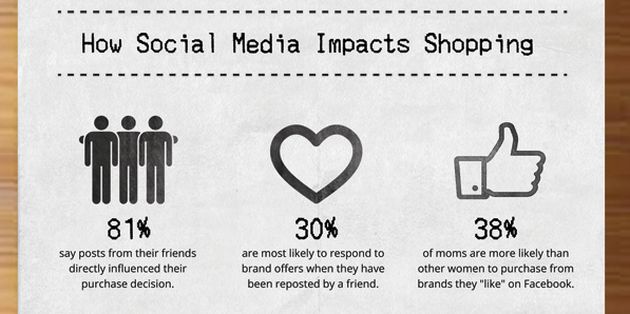
71% of consumers are more likely to make a purchase based on social media referrals.


61% listed the vendor’s reputation as an industry thought leader as being influential


57% browse existing discussions to learn more about a topic before purchasing.


(Source Invesp, 2014)


Behavioral Change


The key to successfully implementing a Social Selling programe is to
understand the business need and ensure buy-in at senior management
level. By sponsoring Social Selling activities at executive level there
will be a clear focus on adoption.


By encouraging the involvement of key stakeholders we give guidance
and encouragement to our sales teams. It’s important to acknowledge all
tactical and strategic implications and to align sales & marketing
functions. With an understanding of the drivers of user engagement and a
commitment to providing the necessary tools & resources, we can
quickly embed a culture of Social Selling.


It’s natural that sales people who have little Social Media
experience will lack confidence in Social Selling. That’s why it’s
essential to have a structured approach to the establishment and
development of a Social Media presence. Building a strong foundation
from the beginning is vital.


Continue reading the full article here:


Social Selling within sales | Instant Lead Generation For Social Selling